Do you need a permit for a portable toilet in Levittown?
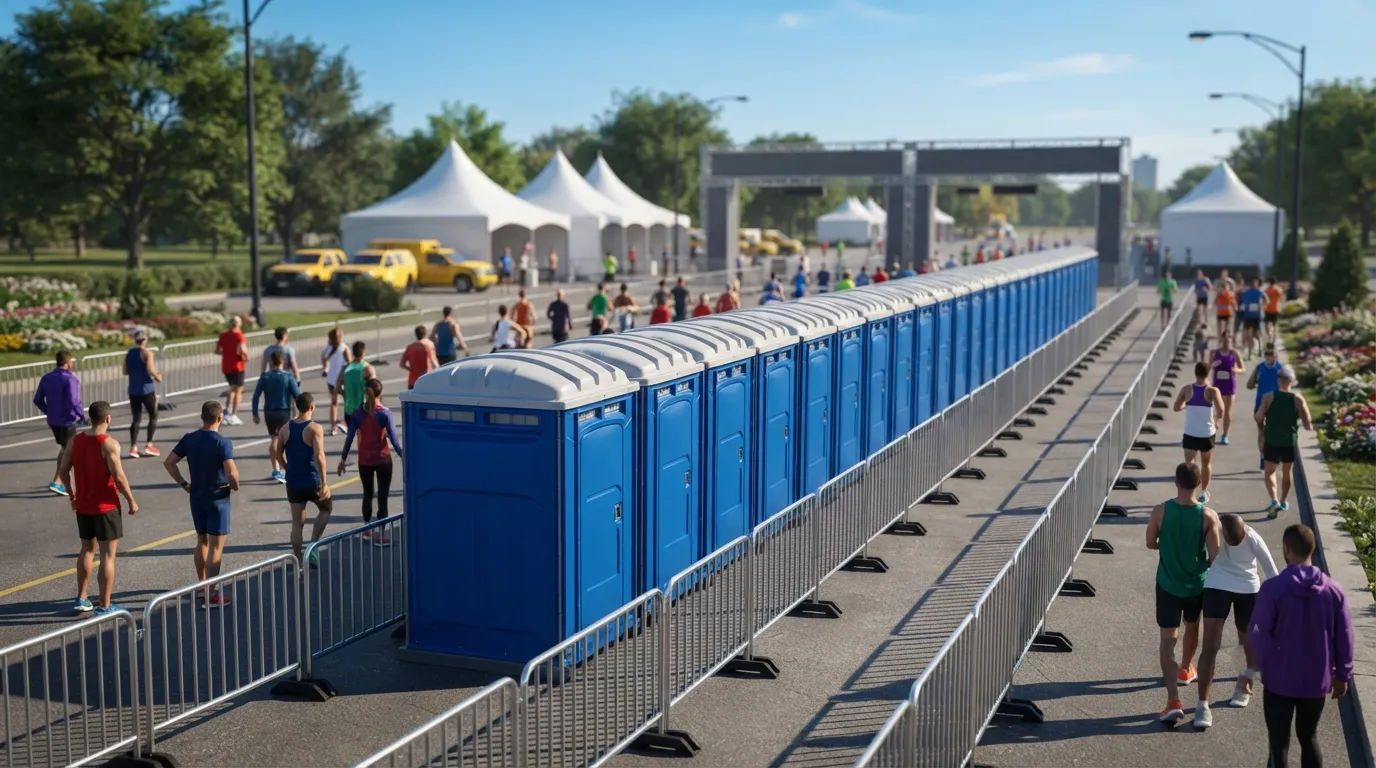
If the unit sits on your own driveway, yard or job site, permitting is usually a non-issue. The moment a portable toilet rental or portable restroom rental lands in a street lane, on a sidewalk or in any public right of way, that is a different conversation, and placement there needs confirming with the city before we deliver anything. We have not verified a specific Levittown ordinance number for right-of-way placement, so do not take a guess from us or anyone else as fact. Call the township and ask directly. This matters more than people think: a home renovation porta potty sitting three feet into a cul-de-sac looks harmless until a plow crew or a delivery truck needs that space. For construction sites, the placement question sits alongside worker-count rules under OSHA 1926.51(c)(1), which sets toilet ratios by crew size regardless of where the city lets you park the unit. Our porta potty placement guide walks through ground clearance and slope before you even get to the permit question.
Do you need a permit for a dumpster on the street?
Almost always, yes, if the dumpster sits on a public street or curb rather than fully on private pavement. This is true well beyond Levittown. A dumpster permit for street placement is common practice from Delaware roll-off yards to jersey city dumpster permit offices, and the pattern holds locally too: once a roll-off dumpster rental occupies any part of the road, the township treats it like a temporary obstruction and wants a permit on file. A 10 yard dumpster rental parked entirely on a driveway typically skips that step; a 20 yard dumpster rental or 30 yard dumpster rental blocking a curb lane does not. Delivery trucks need roughly 60 feet of straight clearance behind the drop point, so measure your driveway and street frontage before ordering. Check our dumpster sizes and dimensions page to plan the footprint, and review what cannot go in a dumpster so the load itself does not create a separate problem.
What about temporary power poles and other site equipment?
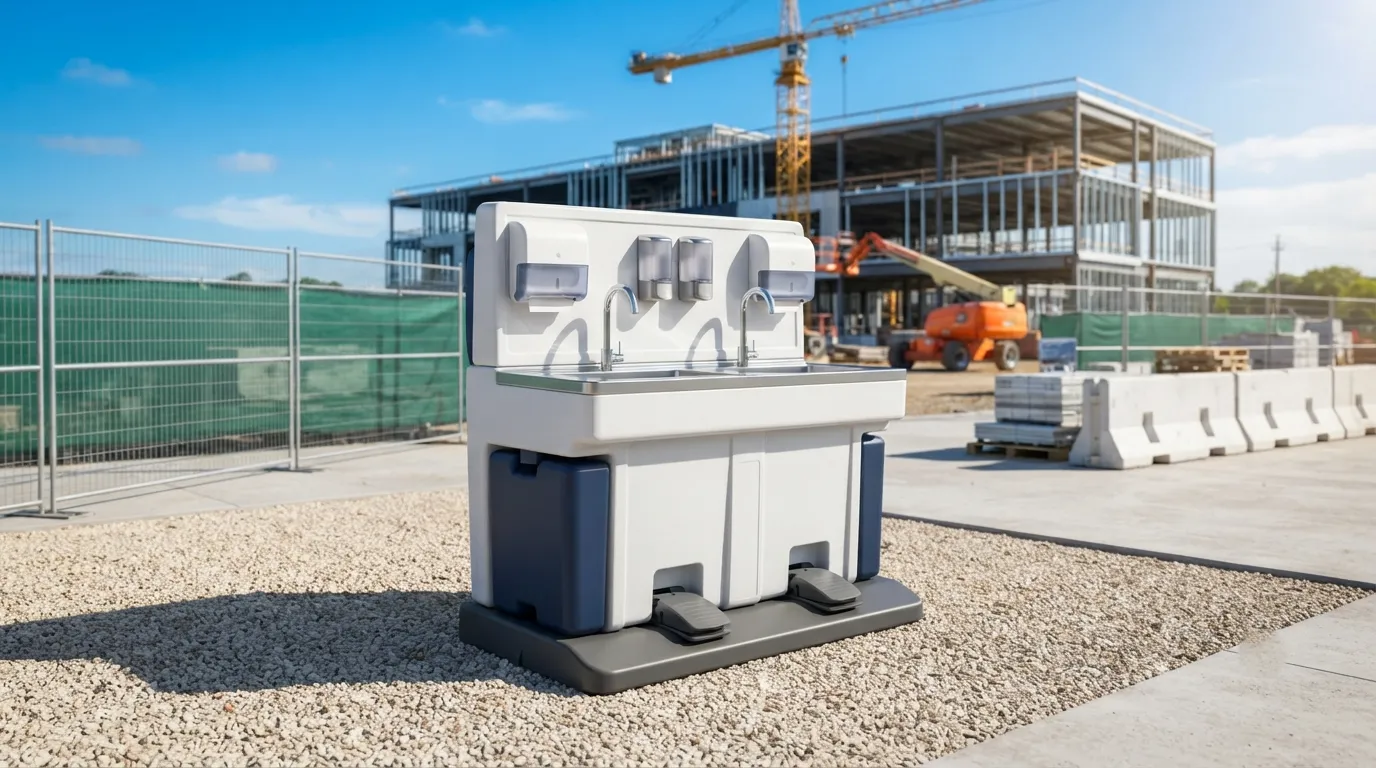
A temporary power pole almost always needs an electrical permit, separate from any toilet or dumpster paperwork, because it ties into utility service rather than sitting as a standalone box on pavement. If your project also needs a light tower rental or a temporary power pole, plan for that permit lead time alongside your sanitation order, not after it. The same logic applies to temporary fence rental: a chain link temporary fence around a job site perimeter can trigger its own approval if it crosses a sidewalk or right of way, so check the temporary fence cost page and confirm placement rules together, not as two separate errands. Bundling these checks saves a second trip to the township office. For general construction site services, we coordinate delivery timing so equipment does not sit waiting on pavement while paperwork catches up. Falls sits about 4.5 miles northeast of Levittown and Fairless Hills about 3.1 miles north; each township handles its own permit desk, so a rule confirmed in one is not automatically true in the other.
Where can porta potties be placed without a permit?
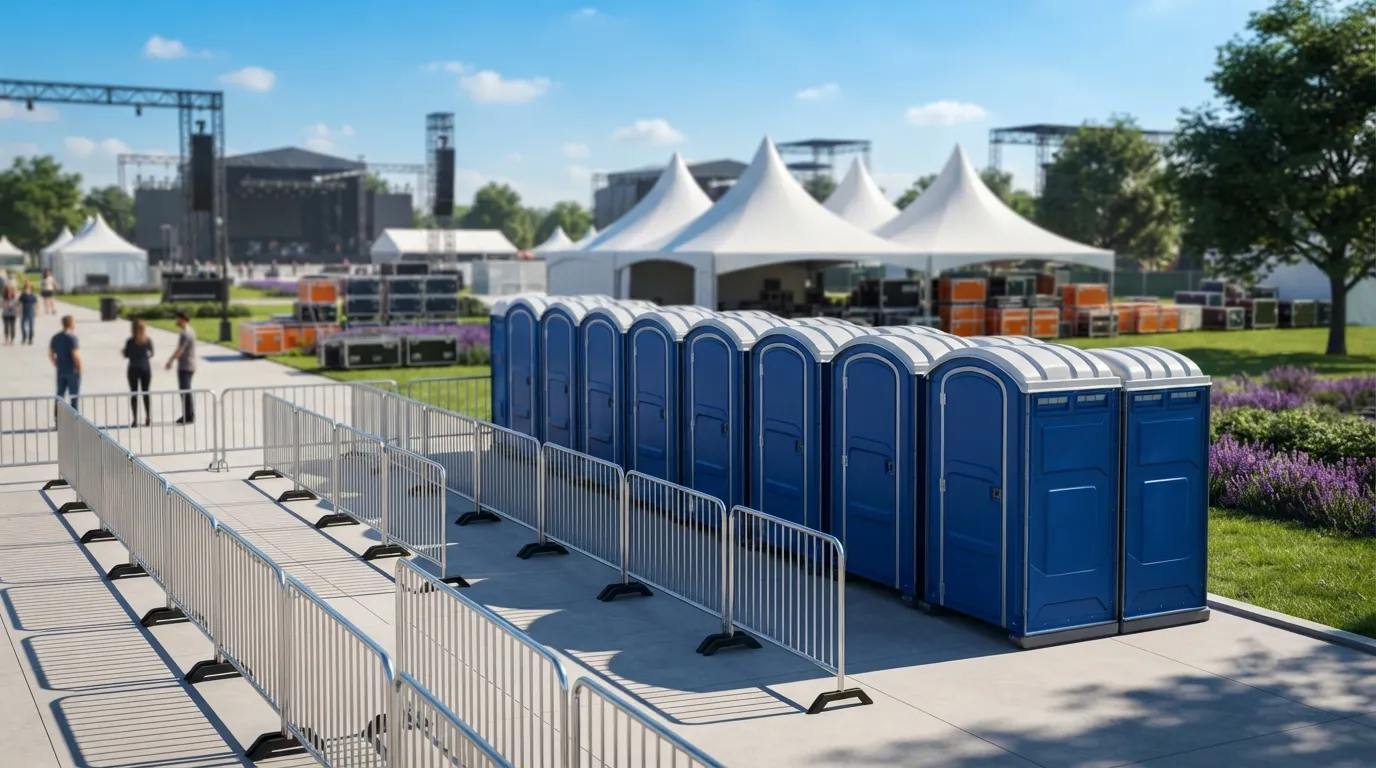
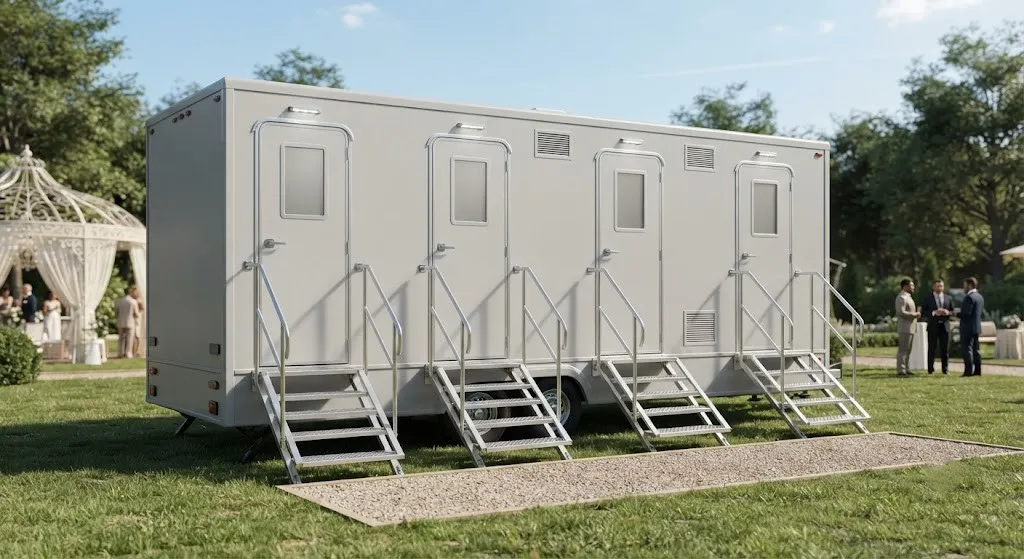
Ground that is level, stable and fully on private property is the safest default, and it is also what the units need mechanically. A standard unit measures about 44 by 48 inches on the ground and stands roughly 92 inches tall, so it needs a footprint that firm and clear, not gravel that shifts or a slope that tips it. ADA Standards section 302.1 calls for stable, firm, slip-resistant surfacing, which applies directly to any ADA accessible porta potty placement, and section 213.2 requires at least one accessible unit, and never less than 5 percent, when units are clustered for an event. If you are budgeting an event restroom rental for a wedding at a local venue or a festival restroom rental, placement inside the venue's own lot avoids the right-of-way question entirely. Our porta potty rental checklist covers ground prep, and the how many porta potties do i need guide pairs placement with headcount so you are not guessing on either front.
| item | consideration | source |
|---|---|---|
| standard unit footprint | 44 x 48 inches | measured spec |
| unit height | 92 inches | measured spec |
| roll-off clearance | 60 feet behind truck | measured spec |
| accessible unit ratio | 5 percent minimum, never fewer than one | ADA Standards 213.2 |
| worker toilet ratio | 1 per 20 workers, 20 or fewer | OSHA 1926.51(c)(1) |
Frequently Asked Questions
Does a residential job in Levittown need a dumpster permit?
Usually not if the construction dumpster rental sits fully on your driveway or yard. Once any part touches the street or curb, plan on a permit conversation with the township first. Confirm before delivery, not after the truck shows up.
Can I place a porta potty on the sidewalk?
Generally no without approval, since sidewalks are public right of way. Levittown Porta Pros checks placement with the city on your behalf when a job site has no other flat, stable ground option nearby.
How far in advance should I apply for a permit?
There is no verified local timeline we can quote, so call the township early. Apply as soon as you know your delivery date, especially if a restroom trailer rental needs street-adjacent parking.
Do event rentals need different permits than construction rentals?
Sometimes. A wedding restroom rental on private venue grounds often skips permitting entirely, while a marathon and race restrooms setup crossing public roads usually needs one. Ask the venue and the township separately.
Does OSHA require a permit too?
No. OSHA 1926.51(c)(1) sets toilet ratios by worker count, not permitting. Municipal permits and OSHA counts are two separate requirements, and meeting one does not satisfy the other.
Next step
Get a delivery date
Tell us the address, the dates and the headcount. We size the order and confirm the route.