What is a portable storage container?
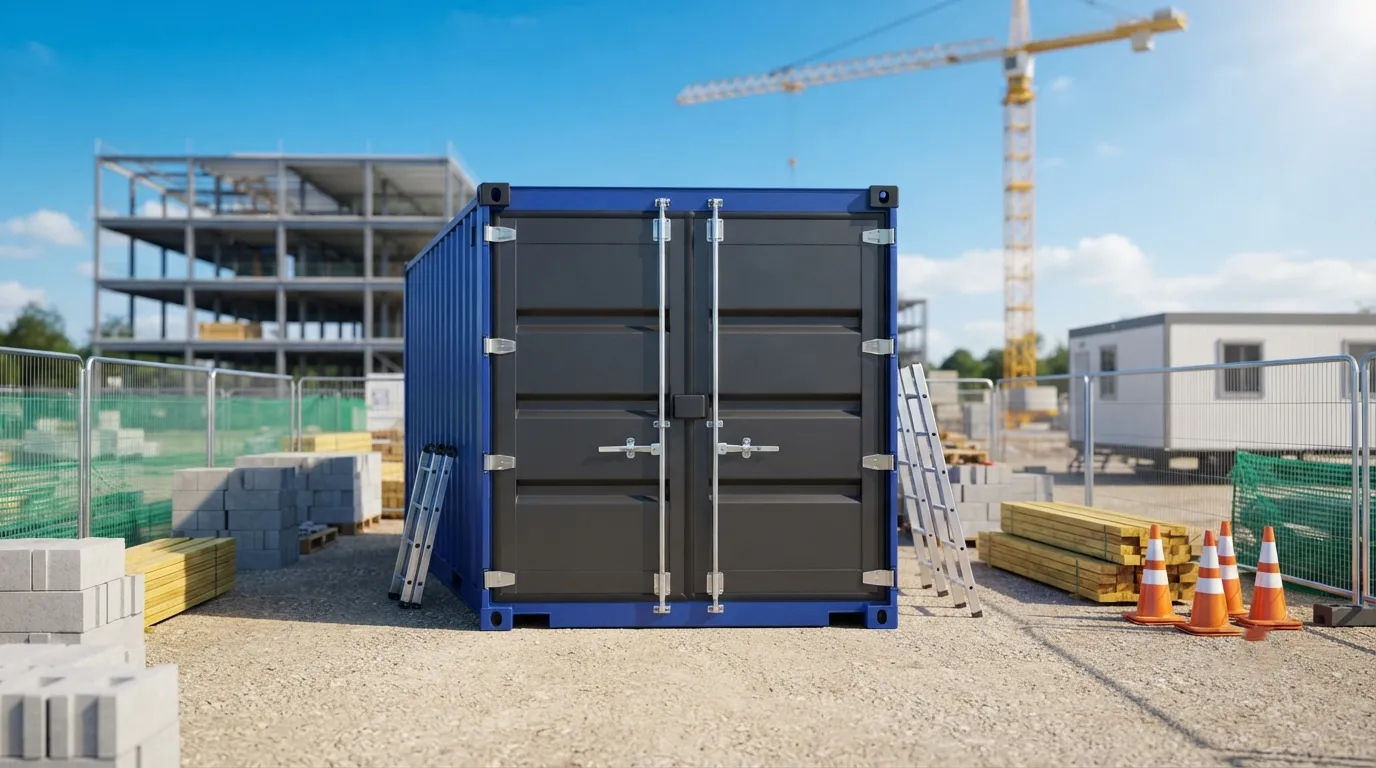
A shipping container, delivered on a tilt bed truck and set on the ground rather than lifted onto a foundation. Doors at one end open the full interior width, the floor is marine plywood, and the door seals are rubber, which is what makes it weathertight through a Pennsylvania summer. Nothing is built and nothing is dug. Two sizes cover almost every job: the 20ft storage container and the 40ft storage container. Pricing sits on the storage container rental cost page.
Which size do you need?
Start with what has to fit and how long it stays. A 20 foot container is 20 feet long, 8 feet wide and 8 feet 6 inches tall, giving about 1,170 cubic feet and around 160 square feet of floor. That covers a crew's tools, a trade's materials, or the contents of a two bedroom house. A 40 foot container doubles it to roughly 2,390 cubic feet and 320 square feet, which is a full site kit with room to walk, or a house clear out with furniture. If the choice is close, the larger box usually wins on a long hold because the delivery cost is the same either way and the monthly difference is small.
How much space does delivery need?
More than the container itself, and this is where most placement problems start. A tilt bed truck placing a 20 foot box needs roughly 60 feet of straight clearance in line with the final position. A 40 foot box needs closer to 100 feet, plus about 14 feet of overhead clearance while the bed lifts. Branches, cables and low canopies all matter. The surface has to be firm and reasonably level: gravel, compacted dirt, asphalt and concrete are all fine, and soft ground after Levittown rain is not. Walk the route before the truck is booked. The placement guide covers the same access questions for the rest of the fleet and the rental checklist is worth reading first.
Do you need a permit in Levittown?
On private property, generally not. Once the container sits on a street, a sidewalk or any part of the public right of way, that placement needs confirming with the City of Levittown before delivery, exactly as it would for a dumpster or a restroom. We can tell you the footprint and the truck requirement; obtaining the permit stays with the site owner unless the quote says otherwise. The porta potty permit requirements page sets out the line we hold on this, and the answer is the same for containers.
What do people store in them?
Tools, materials, fixtures and anything that must stay dry. Contractors use them as a lockable site store, which removes the daily load in and load out and usually pays for itself in labour alone. Homeowners mid renovation empty a house into one before floors and cabinetry go in, normally alongside a standard porta potty on the driveway and a 20 yard dumpster for the strip out. Farms and rural properties toward Bristol use them for feed, fencing and equipment, the same properties that rent farm and agricultural restrooms. Retailers use them for seasonal overflow, and disaster response work uses them for supplies, which the disaster relief sanitation page covers alongside the restroom side of that job.
How secure are they?
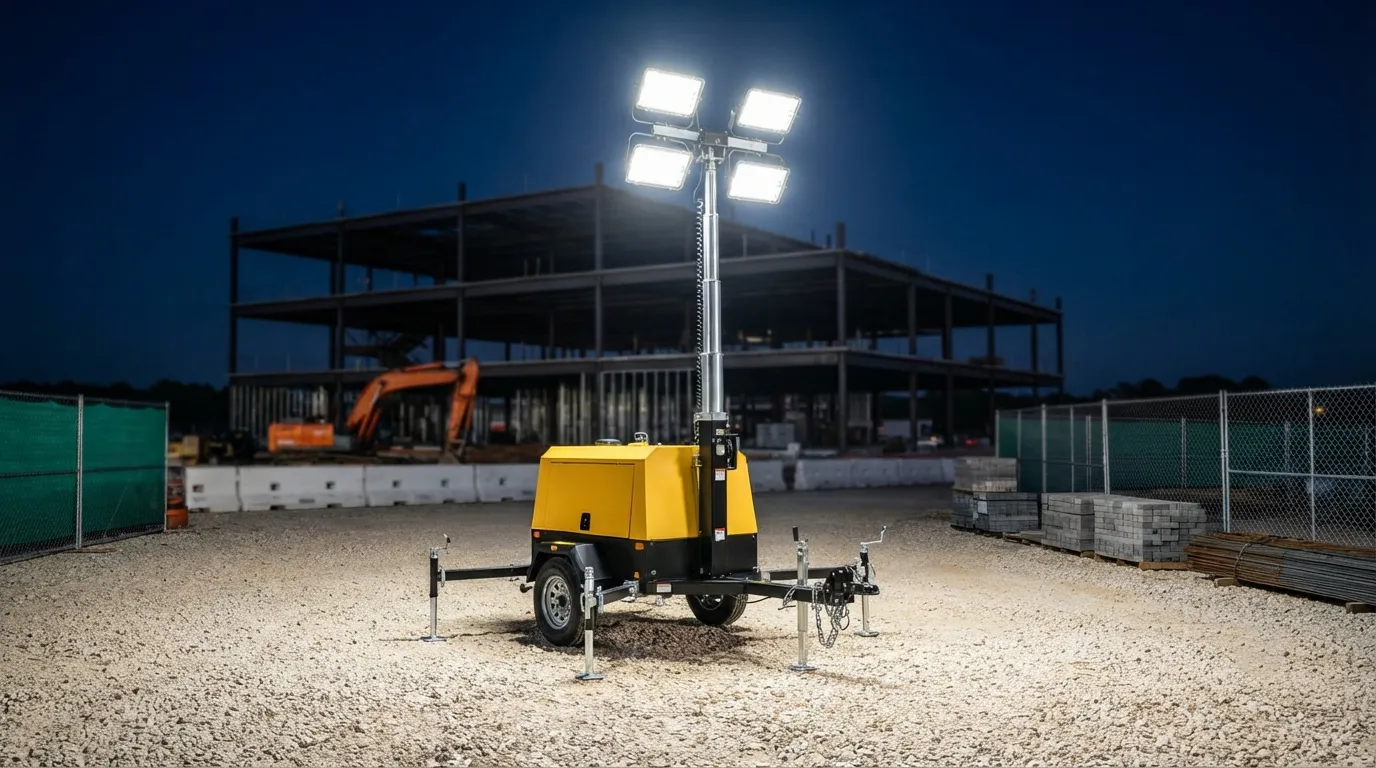
Secure enough to change the risk profile of a site, which is the honest answer. A steel shell with a lockbox over the padlock defeats opportunists and casual theft. It is not a vault, and it should sit inside a fenced compound rather than on an open verge. Temporary fence around the container and a light tower covering the compound do more for overnight security than any upgrade to the box itself, and chain link temporary fence with a lockable gate is the usual specification. Where a site carries a roll-off dumpster or a 40 yard container as well, fencing both together is the normal arrangement, since an unsecured skip attracts fly tipping that you then pay to haul.
How long can you keep one?
Containers rent by the month, so a job that runs a season pays one delivery and one collection and holds the same box throughout. Short holds are possible but the delivery leg dominates, which is why a two week need is often better served by a smaller container or by scheduling the job differently. Long holds are where the economics work, exactly as they do with a monthly porta potty rental. Extending is a phone call rather than a new order, and ending is a collection on the agreed day.
Is a container better than a trailer or a shed?
For most sites, yes, and for three reasons. A container is delivered ready to use rather than assembled, it locks properly, and it goes back when the job ends rather than becoming something you own. A mobile office trailer rental solves a different problem, which is somewhere to sit and do paperwork, and the two are frequently ordered together on a longer build. What a container does not offer is climate control, so anything genuinely temperature sensitive needs a different answer.
What about an event or a seasonal need?
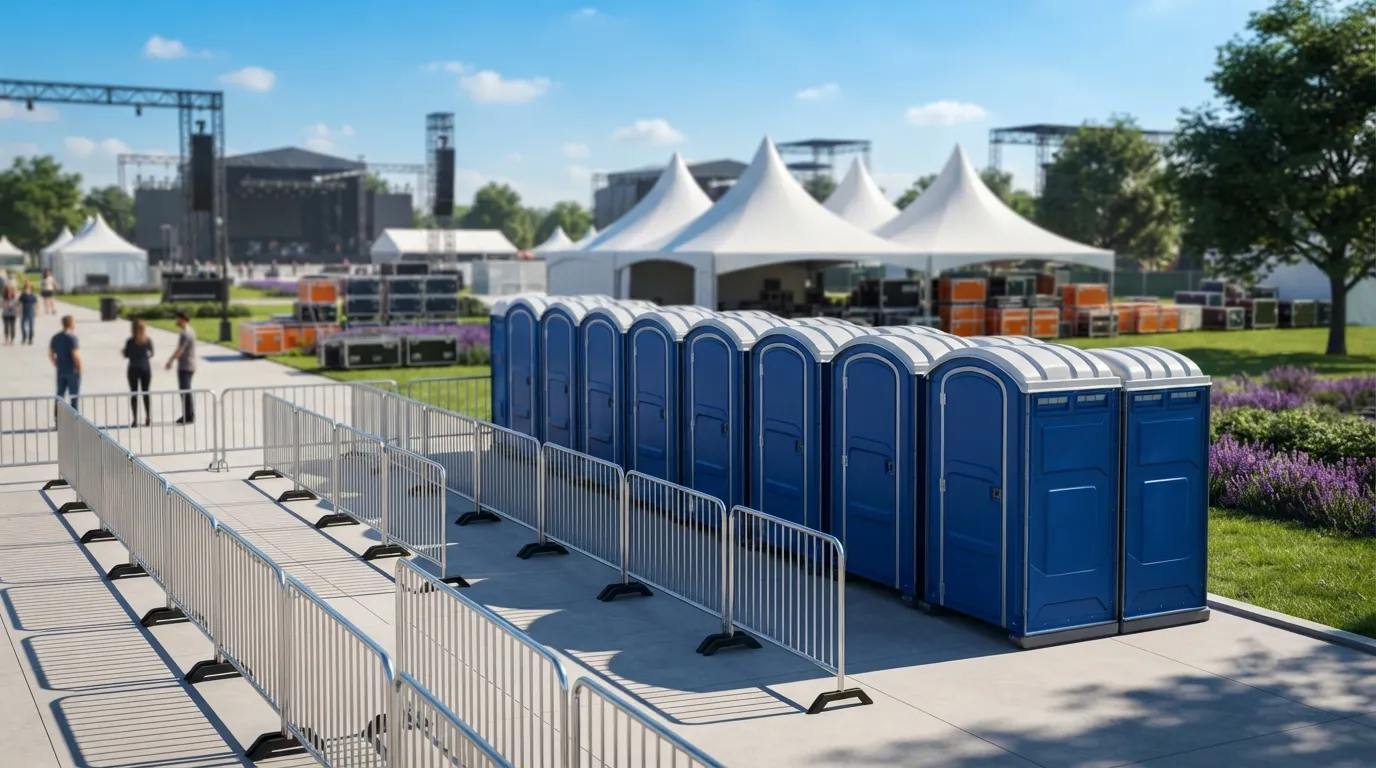
Containers turn up at events as much as on building sites. A festival uses one for staging and equipment during build up and strike, a county fair uses one per section for kit that cannot be left out, and a film set restroom rental order often arrives with a container for wardrobe and props. Seasonal retail overflow is the other steady use, and those holds tend to run three to four months, which is where the monthly rate does its best work.
Does the weather get in?
Not if the doors are shut. These boxes are built for open deck ocean transit, so wind driven rain is not a problem. Condensation is the real issue in a humid Levittown summer, where a sealed steel box with warm damp air inside can sweat on the ceiling overnight. Vents help, keeping the load off the floor on pallets helps more, and desiccant is worth it for anything genuinely moisture sensitive. Ask when you order and we will tell you what the unit has.
What does storage container rental cost?
A monthly rate by size, plus delivery and collection. Size moves the rate less than people expect and duration moves the total more, because the delivery legs are fixed. Distance moves delivery, so a site in Fairless Hills 7.8 miles northeast prices below one out in Burlington 27.9 miles east. The storage container rental cost page carries the working bands and the porta potty rental cost page shows how the rest of the fleet is priced. Send a quote request with the size, the address and the dates.
What else goes on the same order?
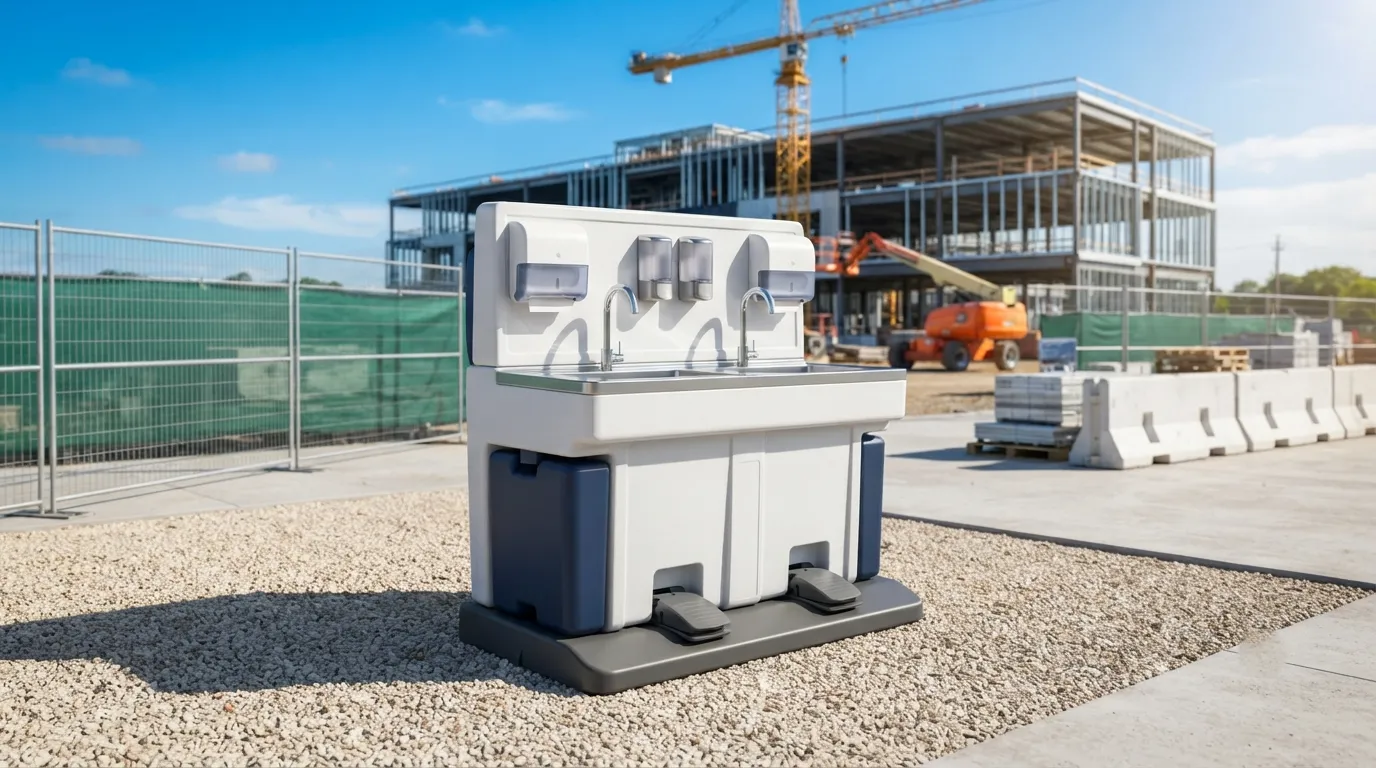
On a working site, most of it. Crews need a standard porta potty rental sized under OSHA 1926.51(c), which sets one facility for up to 20 workers and then one seat and one urinal per 40 above that, and one seat and one urinal per 50 past 200. Where paints, coatings, herbicides or insecticides are handled, OSHA 1926.51(f)(1) requires washing facilities, and 29 CFR 1910.141(d)(2) specifies soap and either towels or a dryer, so a handwashing station or a portable sink joins the list. Add a construction dumpster sized on the dumpster sizes and dimensions page, temporary fence, and a temporary power pole where there is no supply. It all runs on one schedule through construction site services.
Can a container go on grass or dirt?
Yes, if the ground is firm and level. Soft ground after heavy rain is the problem, because the truck sinks and the box settles unevenly. Gravel or a few boards under the corners solve most marginal cases.
Do I need to be on site for delivery?
It helps for the first drop, because the exact position is easier to point at than to describe. If you cannot be there, mark the spot clearly and tell us the approach the driver should use.
Can I move it once it is placed?
Yes, but it is a second delivery charge, because the truck has to come back and reposition it. That is the argument for spending ten minutes on placement at the start.
How fast can you deliver in Levittown?
Most orders land within a few days of the quote being agreed, and sooner when there is a slot. Runs to Falls 10.5 miles southwest and Lower Makefield 11.8 miles west are routine, and the service areas page lists the rest.
Is it cheaper to rent two 20 foot boxes or one 40 foot?
Usually one 40 foot box, because you pay one delivery instead of two. Two smaller boxes win only when they need to stand in different places on the site. Ask on the contact page and we will price both.
Next step
Get a delivery date
Tell us the address, the dates and the headcount. We size the order and confirm the route.